
EMDR Therapy: The Brain, Healing, and God’s Design


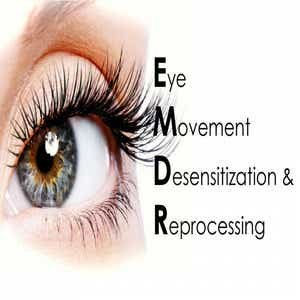
Eye Movement Desensitization and Reprocessing (EMDR) therapy is one of the most researched and effective treatments for trauma. What makes it powerful is not only its therapeutic structure but the way it works with the brain’s natural ability to heal—something God designed in us. To understand how EMDR brings transformation, we need to look at neuroscience, brain plasticity, REM sleep, and the Adaptive Information Processing (AIP) model, and how all of these reflect God’s intended design for restoration.
EMDR Therapy healing by Gods design.
Our brains are constantly changing and adapting—a concept known as neuroplasticity. When we repeatedly think about an event, memory, or belief, our neurons fire together and create neuropathways—like ruts on a dirt road. Over time, these paths become stronger and more automatic. That’s why painful thoughts, trauma responses, and negative beliefs such as “I am not enough” or “I am unsafe” can feel so deeply ingrained. EMDR Therapy brings healing by God’s design, using the gift of neuroplasticity to reshape old pathways of pain into new pathways of truth and restoration.
Thankfully, God designed the brain with the ability to form new pathways. Through therapies like EMDR, new experiences and truths can reshape the way memories are stored. As neuroscientist Dr. Norman Doidge explains in The Brain That Changes Itself, “Neuroplasticity is the property of the brain that allows it to change its structure and function in response to experience” (Doidge, 2007). With intentional processing, old pathways can weaken, and healthier ones can be strengthened.
Trauma and Stuck Responses
When trauma happens, the brain doesn’t always process it fully. Instead of being stored in the past, trauma often gets “stuck” in the body and nervous system. This shows up as heightened anxiety, hypervigilance, or even physical pain. These stored memories are usually accompanied by a negative belief about oneself: “It was my fault,” “I’m broken,” or “I’m not lovable.”
EMDR directly addresses these trauma-stuck memories, not just at the cognitive level but at the deep neurobiological level where the body holds them.
REM Sleep, the AIP Model, and God’s Design
Scientists have noticed that EMDR closely resembles what happens during REM sleep—the time when our eyes naturally move back and forth while dreaming. REM sleep plays a crucial role in memory processing and emotional regulation. Dr. Francine Shapiro, who developed EMDR, based her Adaptive Information Processing (AIP) model on this observation: the brain is designed to heal itself, and trauma blocks that process. Research has shown that bilateral stimulation (BLS) in EMDR mimics the healing functions of REM sleep by helping the brain integrate and reprocess disturbing material (Stickgold, 2002).
From a Christian perspective, it’s beautiful to see how God designed our brains with this built-in healing system. Psalm 139:14 reminds us, “I praise you because I am fearfully and wonderfully made; your works are wonderful, I know that full well.” REM sleep and EMDR show us that God created us with pathways to restoration.
Scripture, Truth, and Reprocessing
Scripture consistently calls us to renew our minds and align our thoughts with truth:
“Do not conform to the pattern of this world, but be transformed by the renewing of your mind” (Romans 12:2).
“We take captive every thought to make it obedient to Christ” (2 Corinthians 10:5).
In EMDR, when bilateral stimulation is applied and the Holy Spirit is invited to guide the process, clients can face a painful memory without being overwhelmed. The memory remains, but the sting and the negative belief lose their grip. Instead, God’s truth—such as “I am loved” or “I am safe now”—takes root. This is not simply a coping skill; it is true transformation that rewires the brain and renews the spirit.
Healing as God Intended
When both sides of the brain are engaged through EMDR, the brain can do what it was created to do: process, heal, and integrate experiences. This is why many clients describe EMDR as life-changing. With the guidance of the Holy Spirit, EMDR can be more than therapy—it can be a sacred space where healing meets divine truth.
As John 8:32 promises, “Then you will know the truth, and the truth will set you free.” EMDR allows space for that freedom to unfold—neurobiologically, emotionally, and spiritually.
References:
Doidge, N. (2007). The Brain That Changes Itself: Stories of Personal Triumph from the Frontiers of Brain Science. Viking Press.
Stickgold, R. (2002). EMDR: A putative neurobiological mechanism of action. Journal of Clinical Psychology, 58(1), 61–75.


Comments